
Do You Need a Permit for a Dumpster in Jackson, MS?
A plain-language look at when Jackson requires a dumpster permit, when it doesn't, and how the rules can shift once you're in Hinds, Rankin, or Madison County.
Jackson dumpster guide
Most of a cleanout or remodel can go straight in the roll-off. A short list of items can't — here's what Mississippi rules say about paint, tires, appliances, batteries, and asbestos, and where those items actually need to go.

Most people renting a dumpster in the Jackson area never think twice about what goes in it — and for the vast majority of a cleanout, remodel, or demolition job, that's fine. Lumber, drywall, old furniture, flooring, shingles, and general household junk all go straight in. But a short list of items don't belong in a roll-off in Mississippi, either because state law prohibits it or because there's a better, cheaper disposal route for it. Knowing the difference before the container shows up saves you a rejected load, a contamination fee, or a trip back to the job site to pull something out. Here's what actually goes where.
The bulk of what fills a residential or commercial dumpster in Jackson is unrestricted, ordinary solid waste. That includes:
If you're not sure whether your project fits a standard load, our construction dumpster rental and demolition debris pages break down what each job type typically needs, or just call (769) 246-8432 and describe it — we book by phone, not a web form, so you're talking to someone who can answer the question directly.
Mississippi law is direct on this point. Miss. Code § 17-17-15 bars disposing of hazardous waste together with ordinary solid waste — you can't co-mingle the two, in a dumpster or anywhere else in the regular trash stream. In practice, that covers things like oil-based paint, paint thinners and solvents, pesticides and herbicides, pool chemicals, automotive fluids, and old cleaning chemicals. None of that belongs in a roll-off.
Latex (water-based) paint is a little different: once it's fully dried out or solidified with cat litter or a hardening product, it's generally treated as ordinary solid waste in small quantities and can go in with the rest of a load. If a can is still liquid, or if it's oil-based, treat it as hazardous waste rather than guessing. The City of Jackson's Household Hazardous Waste program accepts paint, oils, batteries, electronics, fluorescent bulbs, and pesticides from Jackson residents — it's the right drop-off point for anything in this category. MDEQ also publishes general guidance on how solid waste is supposed to be managed statewide; see their solid waste management guidance for the state-level picture.
Tires get their own section of state law. Miss. Code §§ 17-17-401 through 17-17-445 set up a dedicated waste-tire program for Mississippi, and tires are meant to be diverted through that system rather than landfilled with general household or construction trash. If a job you're cleaning up involves old tires — a garage cleanout, a shop closure, a stack left behind a property — keep them out of the dumpster and route them through a tire retailer, service center, or the waste-tire program rather than tossing them in with everything else.
Appliances that held refrigerant — refrigerators, freezers, window air conditioners, dehumidifiers — need that refrigerant professionally recovered before the unit is scrapped, so they're generally handled as a separate pickup rather than loaded into a roll-off. If your cleanout includes an old fridge or AC unit, plan for that separately and ask us about it when you call.
Electronics are a slightly different case, and it's worth being precise about it: Mississippi does not have a statewide landfill ban specifically on electronics or e-waste. That means an old TV or computer isn't automatically illegal to send to a landfill the way hazardous waste is. What Mississippi does have is a strong recycling push — MDEQ and the City of Jackson's household hazardous waste program encourage residents to recycle electronics rather than landfill them, since they can contain lead, mercury, and other materials worth recovering. For a whole-house cleanout with a stack of old electronics, the HHW program is the better route even though it's not a hard legal requirement.
Lead-acid batteries — car, marine, and similar batteries — and household batteries are accepted through the City of Jackson's Household Hazardous Waste program and shouldn't go in a dumpster. Most auto parts stores will also take a lead-acid battery back for recycling, which is often the more convenient option if you're already swapping one out.
Asbestos is the one category with no gray area. It never goes in a rented dumpster, period. A lot of Jackson-area housing near downtown, Belhaven, and Fondren predates 1978, and older homes in that range can have asbestos in floor tile and mastic, pipe wrap insulation, textured ceiling material, or some siding products. If a renovation is going to disturb flooring, plaster, or insulation in an older home, that material needs to be identified and handled by a licensed asbestos abatement contractor — not bagged up with drywall and flooring debris. The same older housing stock can also carry lead paint, which is a separate issue handled under federal renovation rules rather than a disposal ban, but the practical takeaway is the same: on a pre-1978 home, don't guess. Get it checked before demolition starts, and let an abatement specialist handle anything that comes back positive. This is not something a dumpster rental company handles or should be asked to handle.
| Item | Goes in the dumpster? | Where it actually goes |
|---|---|---|
| Furniture, general junk, C&D debris | Yes | Standard roll-off |
| Dried latex paint | Yes, in small amounts | Standard roll-off once fully solid |
| Oil-based paint, solvents, chemicals | No | City of Jackson HHW program |
| Tires | No | Mississippi waste-tire program / tire retailer |
| Refrigerant appliances | No | Separate pickup after refrigerant recovery |
| Electronics (TVs, computers) | Not banned, but not recommended | City of Jackson HHW recycling |
| Batteries | No | City of Jackson HHW program / auto parts retailer |
| Asbestos-containing material | Never | Licensed abatement contractor only |
Disposal facilities check incoming loads, and a hazardous or prohibited item found at the scale doesn't just quietly disappear — it can mean the load gets flagged, sorted out, or charged a contamination fee, and Miss. Code § 17-17-15 exists specifically to keep hazardous material out of the ordinary trash stream in the first place. The easiest fix is keeping the short list of exceptions — hazardous chemicals, tires, refrigerant appliances, batteries, and anything asbestos-related — out of the container from the start. If you're not sure whether something in your project qualifies, ask us before the job starts rather than after the dumpster is full.
Sorting is a lot easier when the dumpster is sized right for the job — an overfilled bin is exactly when people start cramming in things that shouldn't be there. Take a look at our dumpster size guide or the 20-yard dumpster page for a typical remodel, and check our Jackson permit guide if the container needs to sit in the street rather than your driveway. We deliver throughout Byram, Clinton, Ridgeland, Madison, and the rest of the Jackson metro, with flat-rate pricing and driveway protection boards on every delivery. Call (769) 246-8432 or visit our contact page and we'll walk through what your specific load needs before it ever reaches the scale house.
FAQs
Dried latex paint in small amounts is generally fine as ordinary solid waste. Oil-based paint, thinners, and solvents are hazardous waste under Miss. Code § 17-17-15 and cannot be mixed with regular trash — take those to the City of Jackson's Household Hazardous Waste program instead.
No. Mississippi runs a dedicated waste-tire program under Miss. Code §§ 17-17-401 through 17-17-445, and tires need to be diverted through that program or a tire retailer rather than landfilled with general trash.
Not exactly. Mississippi does not have a statewide landfill ban on electronics, so an old TV or computer isn't automatically prohibited. That said, MDEQ and the City of Jackson's Household Hazardous Waste program encourage recycling electronics rather than landfilling them, and that's generally the better route for a cleanout.
Stop and have the material tested before demolition begins. Asbestos-containing material can never go in a dumpster and must be handled by a licensed asbestos abatement contractor — this is especially relevant in older homes near downtown Jackson, Belhaven, and Fondren.
Batteries are accepted through the City of Jackson's Household Hazardous Waste program or most auto parts retailers. Appliances with refrigerant, like refrigerators and window AC units, need the refrigerant professionally recovered first, so we typically handle those as a separate pickup — call (769) 246-8432 and we'll sort out the details for your job.
Ready when you are
Call and you will speak to someone local who knows the streets, the permit rules and which box actually fits your driveway. Flat rate quoted up front.
Keep reading
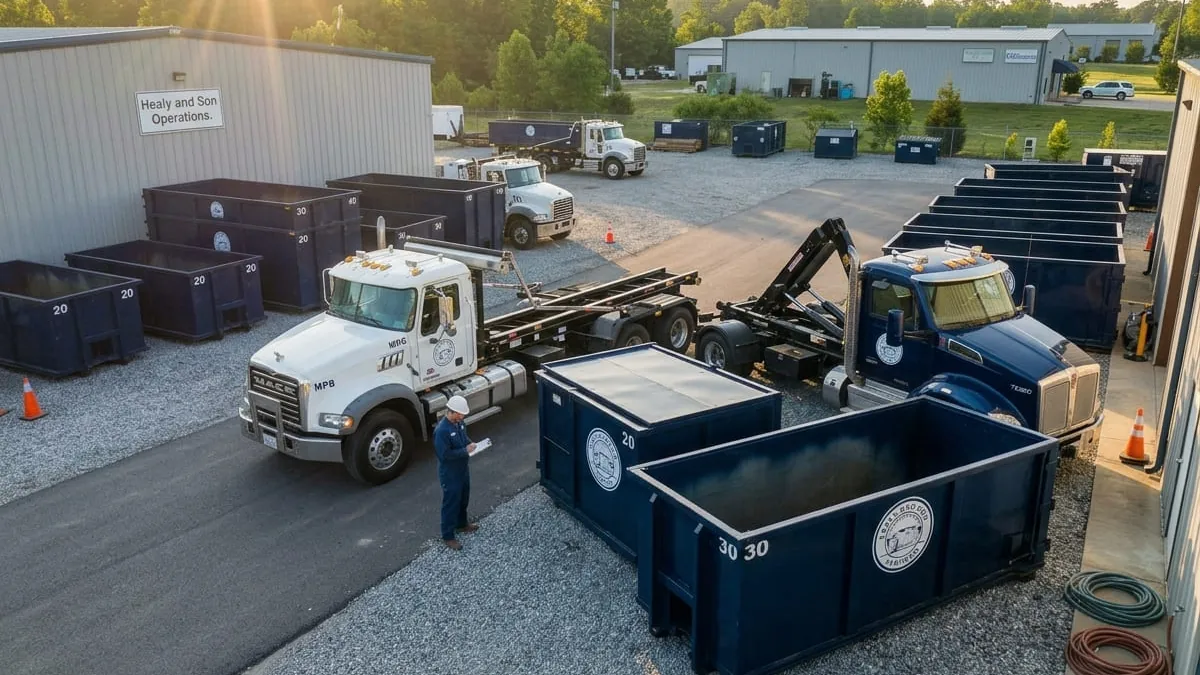
A plain-language look at when Jackson requires a dumpster permit, when it doesn't, and how the rules can shift once you're in Hinds, Rankin, or Madison County.
A practical guide for Jackson-area builders on sizing dumpsters by job phase, handling heavy Yazoo clay excavation spoil correctly, and keeping active job sites in Madison, Flowood, Brandon, and Ridgeland moving.
A practical, room-by-room guide to clearing a parent's Jackson home: what to secure before anything is thrown away, how to pace the work, and how to size the dumpster for a house that has decades in it.