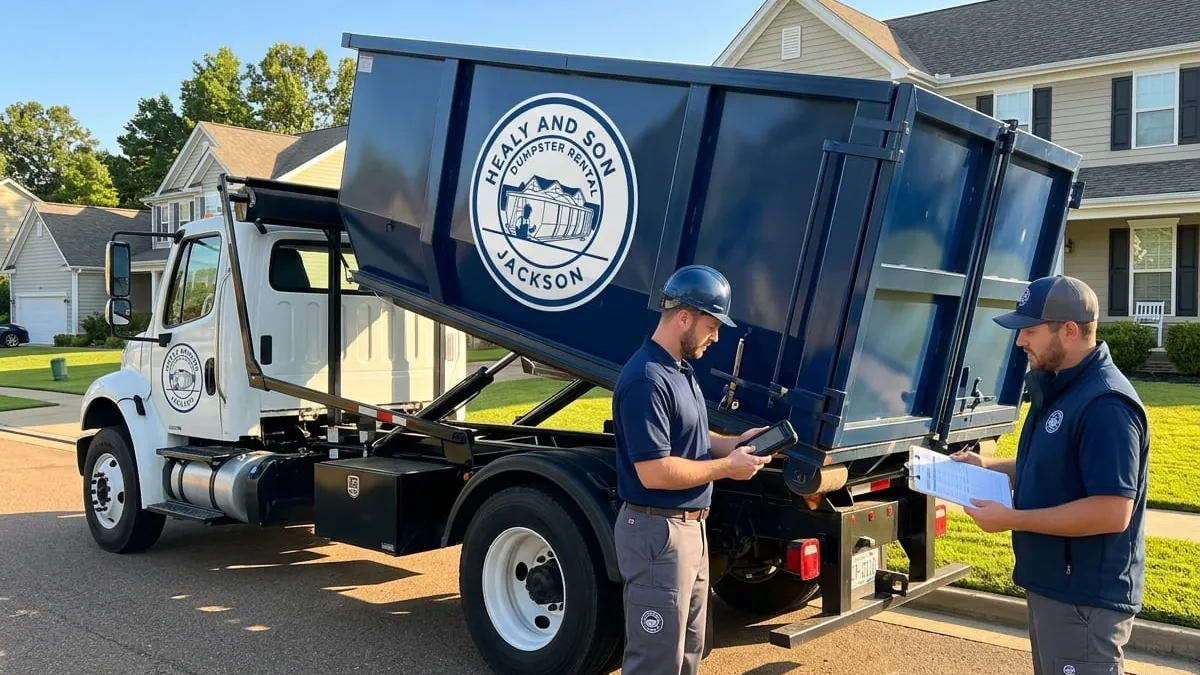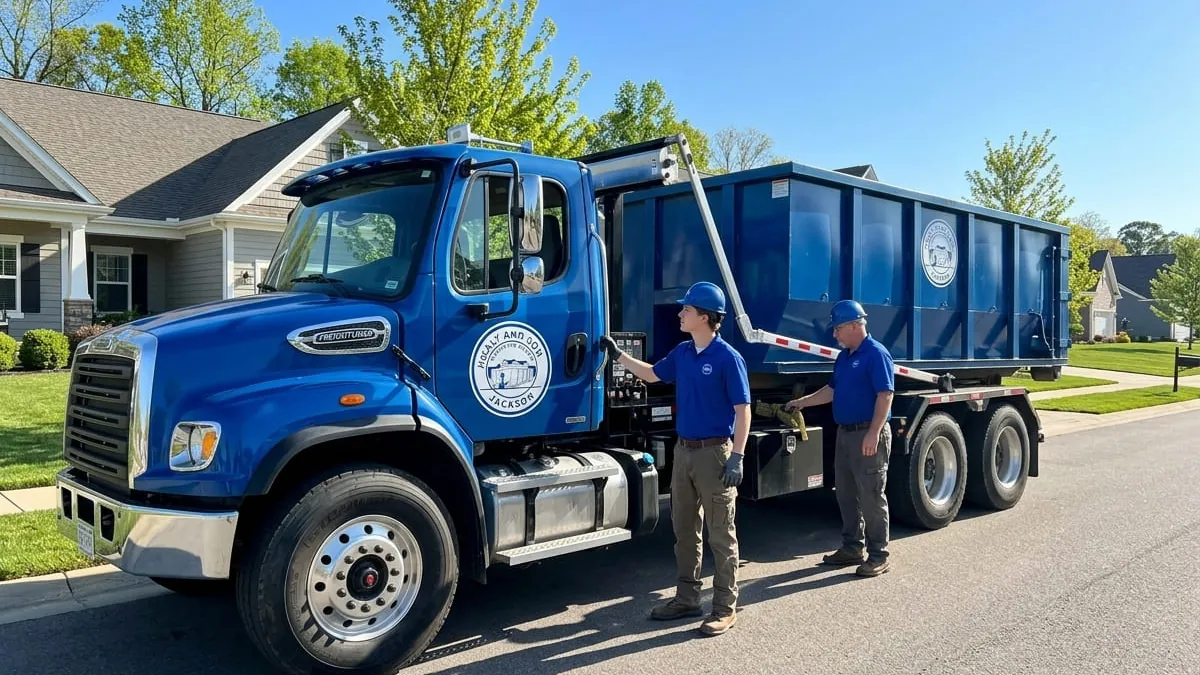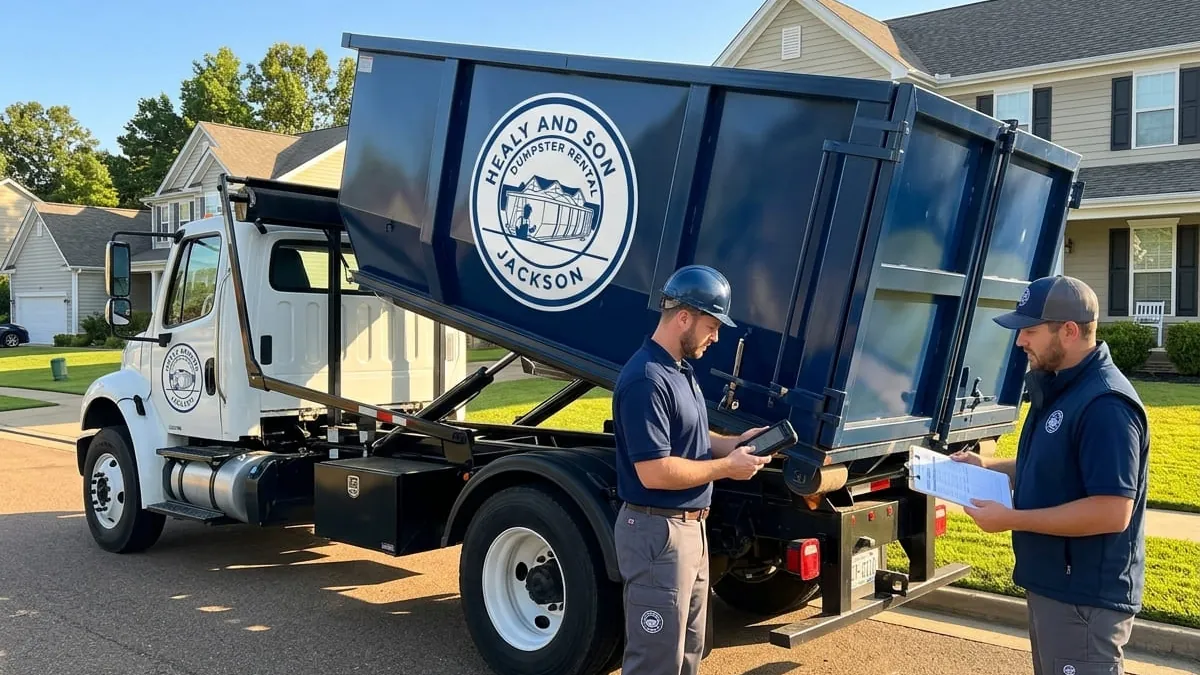
Run enough jobs around the Jackson metro and you learn that the container that worked fine on a Fondren remodel can come in overweight on a new build out in Madison or Brandon, and the reason usually traces back to what came out of the ground before framing ever started. Construction and demolition debris in this market is not one material, it is several, and the two that trip up estimates most often are the heavy stuff — dirt, clay, concrete — and the bulky, lighter stuff from framing and finish work. Planning around that difference is what keeps a container swap schedule on budget instead of turning into a change order.
C&D Debris Covers More Than People Expect
Construction and demolition debris is its own category, separate from household trash, and it covers a wide range of material on a typical Jackson-area job: framing lumber and sheathing offcuts, drywall, roofing material, concrete and masonry, old fixtures and cabinetry pulled during a remodel, packaging, and — on new construction or additions — the dirt and clay that comes out of the ground during site prep and foundation work. All of it can usually go in the same roll-off container, but mixing heavy material with light material in one box is exactly what causes weight overages on jobs that looked fine on paper.
The Mississippi Department of Environmental Quality sets the state's general rules for how solid waste, including construction debris, gets handled and disposed of. Their general solid waste guidance is worth a look if you want the state-level framework, and Mississippi law (Miss. Code § 17-17-15) bars mixing hazardous waste in with ordinary construction debris, so anything like old paint cans, solvents, or fuel needs to be handled separately, never tossed in the roll-off with the rest of the tear-out.
Yazoo Clay Changes the Math on Excavation Jobs
Anyone who has poured a foundation in this part of Mississippi already knows the soil here is not forgiving. The Yazoo clay that underlies much of the Jackson metro is dense and expansive — it swells when wet and shrinks when it dries out, which is why so much foundation and slab work in this area accounts for it up front. That same density matters just as much when it comes out of the ground during excavation, because clay spoil is dramatically heavier per cubic yard than the framing debris that shows up later in the same project.
A container that would comfortably hold several days' worth of framing offcuts can hit its weight allowance with a fraction of that volume in wet Yazoo clay. Site prep, footing excavation, and grading spoil should be planned and priced as a separate line from the rest of the job's debris, not folded into a general estimate built around lumber and drywall weight. On jobs with significant cut material, a dedicated concrete and heavy debris container run alongside your main construction box keeps the heavy material from eating the tonnage allowance meant for everything else.
Roofing debris deserves its own plan too — our roofing tear-off dumpster guide walks through sizing a tear-off separately from the rest of a renovation, which matters for the same reason clay spoil does: shingles are heavy for their volume.
Sizing by Job Phase Instead of the Whole Project
The most common mistake we see on active builds is renting one large container up front to cover a project start to finish. Debris changes character as a job moves through its phases, and swapping containers as you go almost always beats parking one oversized box on site for weeks:
- Site prep and excavation — heavy clay and dirt; a 20-yard or 30-yard container swapped as it fills controls weight better than one box sitting through the whole dig
- Foundation and concrete work — dense, heavy material; keep it in its own container rather than mixed with framing waste
- Framing — bulky, lighter offcuts; volume matters more than weight at this stage
- Rough-in, drywall, and insulation — moderate weight; a 20-yard typically covers this phase on a mid-size job
- Finish and punch-out — light, mixed trim and packaging waste; a 15-yard or 10-yard usually handles it
For a full new build or a major addition, a 40-yard container makes sense for high-volume light debris once the heavy excavation and concrete work is out of the way. See our dumpster sizing guide for more on matching container size to the job in front of you, and use construction dumpster rental built around swap-outs rather than a single long-term container that racks up standby time doing nothing.
Older Homes Add a Step Before Demo Starts
Renovation work in Jackson's older neighborhoods — Belhaven, Fondren, Eastover, and similar pre-1978 housing stock — carries lead paint considerations as a near-given, and if plaster or old flooring gets disturbed there can be asbestos to account for as well. That work belongs to a licensed abatement contractor, not the dumpster company, and it needs to happen before demo debris starts filling a container. Build that check into the front of your schedule on any older-home remodel rather than discovering it mid-tear-out.
Where the Growth Is Right Now
A lot of the new-construction and major-addition work we deliver to right now is out in the fast-growing parts of the metro — Madison, Flowood, Brandon, and Ridgeland all have active new subdivisions and commercial build-out alongside the renovation work that is steadier across the whole metro. New-build sites in these areas tend to generate more excavation and grading spoil relative to finish debris than a remodel in an established neighborhood does, so plan container swaps around that heavier front-loaded phase rather than assuming a flat pace of debris across the whole build.
Placement and Permits
Placement on your own lot or driveway generally does not need a permit. If a container has to sit in the street or public right-of-way on a tight urban lot, contact the appropriate city or county public works department first and build in lead time — our Jackson dumpster permit guide covers the details for placement across the metro.
What to Tell Us Before Delivery
A short call before the truck shows up avoids most of the problems above. Let us know:
- What phase the job is in — excavation, framing, finish — so we size and schedule around the right material
- Whether the job involves significant clay excavation, grading spoil, or concrete removal
- The age of the structure, if it is a renovation on an older home
- Site access on the lot, especially on newer subdivision streets that may still have construction traffic
- Your expected swap-out cadence for a multi-week job
That is the difference between a container sized for the job in front of you and one that comes in overweight halfway through the day.
Working With Healy and Son Dumpster Rental
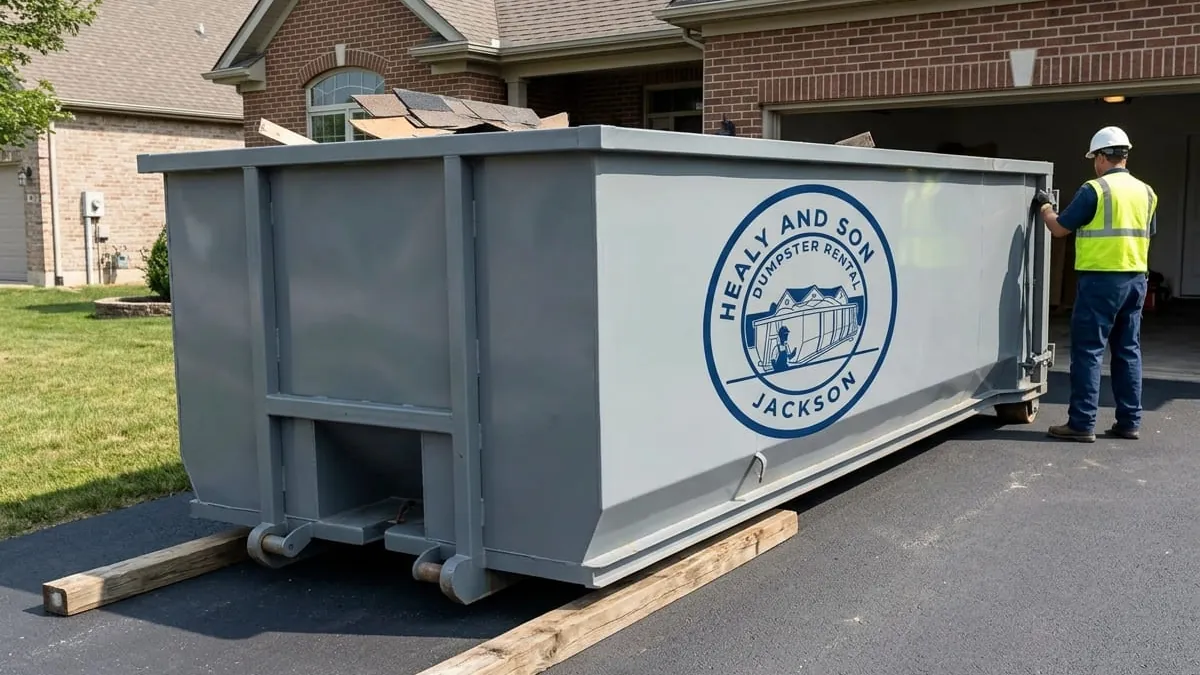
We have hauled construction debris across the Jackson metro since 2011, and we size jobs around what actually comes off a Mississippi site, not a generic national chart. We own our own trucks and containers, we quote flat-rate pricing with delivery, rental period, tonnage, and pickup in one number, and we protect driveways with boards on every delivery as standard. Whether the job is a full demolition, a roof tear-off, or a phased commercial build-out in Madison, Flowood, Brandon, Ridgeland, or anywhere else in the metro, call (769) 246-8432 before your crew breaks ground and we will size the swap schedule right the first time. Call before noon and we can usually get a container out the same day.