Mississippi's spring storm season doesn't ease in gently. One afternoon it's clear, and by evening a line of severe thunderstorms has dropped limbs across the yard, peeled shingles off the roof, and flattened a section of fence along the back property line. We've been running roll-off containers around the Jackson metro since 2011, and storm cleanup calls are some of the most time-sensitive work we do. This is what we tell customers who call us the morning after a bad blow-through.
Why Storm Debris Piles Up Fast Here
Jackson sits squarely in the part of the country climatologists call Dixie Alley — a zone where severe thunderstorms and tornadoes are common from late winter through spring, often peaking March through May. Most years that means downed limbs, a few uprooted trees, and torn-up gutters and fencing across Hinds, Rankin, Madison, and Copiah counties. Mississippi also takes on remnant rainfall from tropical systems that track inland later in the year, which can turn a wind event into a flooding event on top of it. The region has seen the extremes of both: the March 3, 1966 F5 tornado that tore through the Jackson area remains one of the deadliest in Mississippi history, and the Pearl River crested at roughly 36 feet in February 2020, its third-highest level on record. Most storms we respond to are nowhere near that scale, but that history is part of why local crews, roofers, and tree services treat storm season here seriously rather than casually.
Whatever caused the mess, the practical problem is the same: you've suddenly got a yard full of debris that didn't exist yesterday, and it needs to be gone before it becomes a tripping hazard, a mower obstacle, or something the next storm turns into a projectile.
What Storm Cleanup Actually Fills a Dumpster With
Storm jobs tend to mix several debris types in one cleanup, which matters when you're sizing a container:
- Limbs and downed tree material — branches, brush, and sometimes whole trees dropped by wind or lightning
- Roof debris — torn shingles, damaged flashing, and soffit or gutter sections after wind or hail damage
- Fencing — wood panels, posts, and chain-link sections knocked flat by falling limbs or straight-line wind
- Flood-related debris — water-damaged drywall, flooring, insulation, and ruined furniture after rising water gets into a structure
- General yard debris — leaves, mulch beds, and landscaping torn up by wind or standing water
Mixing yard waste with construction-type debris like roofing and drywall is fine in a general roll-off, but it's worth telling us up front what's going in the box. Straight yard debris (limbs, brush, leaves) is generally lighter by volume than roofing or wet flood debris, and that affects which size makes sense and how close you'll run to the included weight allowance. If your job is mostly branches and yard cleanup with nothing else mixed in, our yard waste dumpster service is built specifically for that and can be the more economical call.
Sizing a Dumpster for Storm Damage
Storm debris is bulky and irregular — branches don't stack flat the way framing lumber does — so people often undersize for the volume they're actually dealing with. Here's roughly how storm jobs break down against our container sizes:
If you're not sure which of these fits, describing the damage over the phone is faster and more accurate than guessing from a size chart — we size storm jobs by phone every week during severe weather season and can usually tell you the right container in a two-minute call.
Speed Matters More Than Usual After a Storm
Storm cleanup is one of the few jobs where waiting a few extra days genuinely makes things worse. Wet debris sitting in a yard starts to break down and attract pests. A downed limb blocking a driveway or partially resting on a power line is a liability you want handled, not lived with. And insurance adjusters generally want the property documented and cleared in a reasonable window, not weeks later.
That's why we run same-day dumpster delivery when you call before noon on a business day. During active storm stretches we get a run of calls at once, so the earlier in the day you reach us, the better your odds of a same-day drop. If you call after our cutoff, we'll still typically have you set up first thing the next morning — we don't like leaving storm-damaged properties waiting any longer than we have to.
A Few Safety Notes Before You Start Hauling
- Never approach a downed power line, even if it looks dead. Treat every line on the ground as energized and call Entergy Mississippi or 911 to report it rather than moving it yourself.
- Let a tree service handle anything hung up or under tension — a leaning tree or a limb caught in another tree can shift without warning once you start cutting.
- Don't climb a wet or damaged roof to assess or clear debris. Leave roof-level work to a licensed roofer, especially after wind or hail has already compromised the deck.
- Wear gloves and closed shoes when clearing yard debris — storm brush hides nails, broken glass, and exposed screws from torn-up fencing far more often than people expect.
- Keep the dumpster's placement path clear and away from any sagging or downed lines so our driver has a safe, unobstructed spot to set the container.
Flood Debris Needs Its Own Plan
If a storm brought rising water into a structure rather than just wind damage, the cleanup is different from a typical yard job. Wet drywall, soaked insulation, and water-damaged flooring should come out promptly to limit mold growth, and none of that belongs mixed with household hazardous waste like paint, batteries, or chemicals that may have gotten wet in a garage or shed. The City of Jackson's Household Hazardous Waste program is the right outlet for that material rather than the dumpster, and their trash and recycling page covers what the city collects at the curb. For broader state guidance on solid waste handling during a large cleanup, the Mississippi Department of Environmental Quality is a useful reference, and Mississippi law bars mixing hazardous waste in with ordinary trash regardless of how the debris got there.
What We Do Differently for Storm Calls
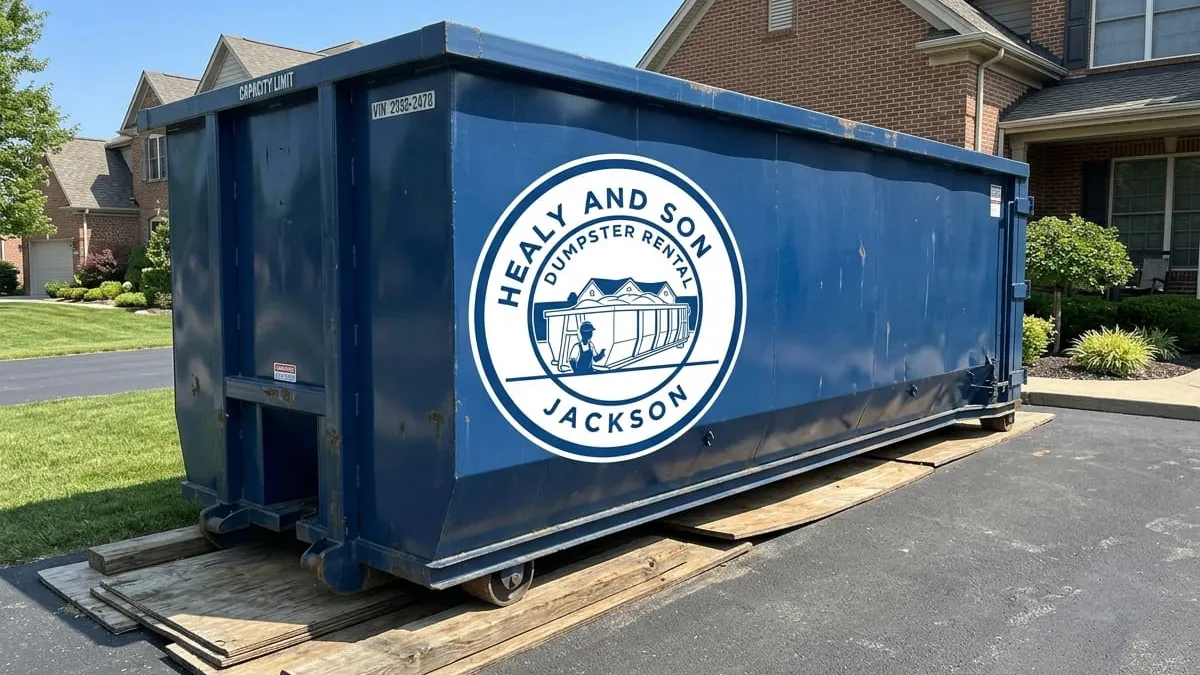
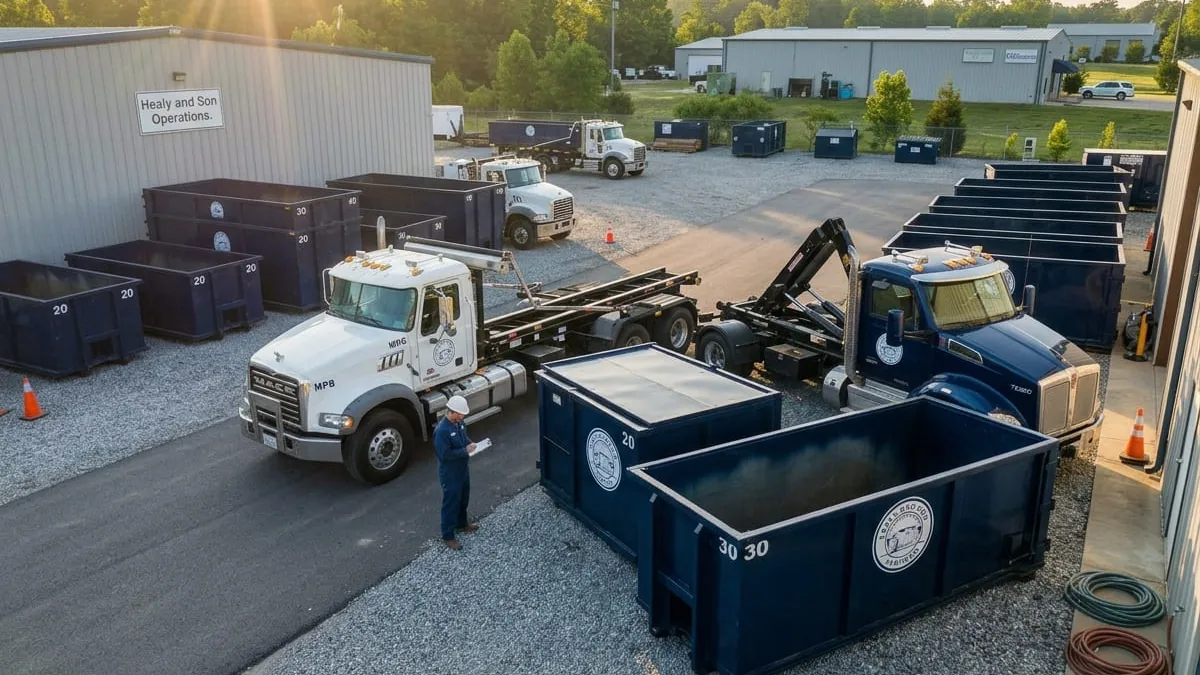
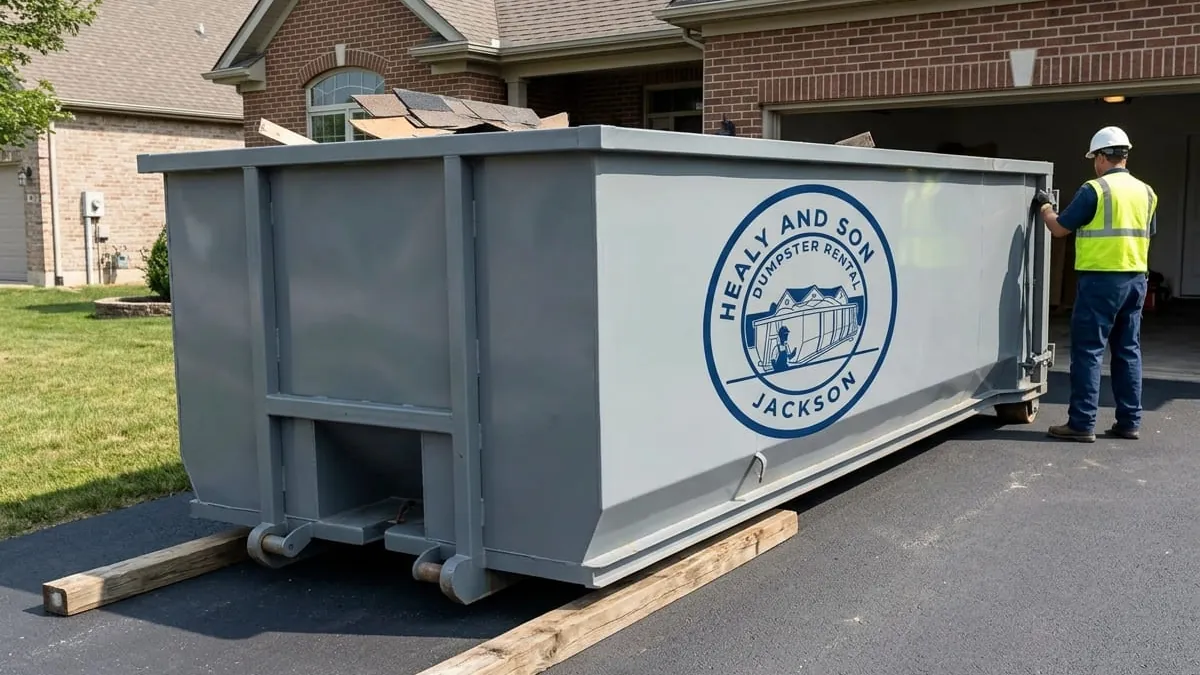
Healy and Son owns its own trucks and containers — we're not a broker relaying your call to a third party, which matters most when speed counts. Every rental is flat-rate: delivery, the rental period, a tonnage allowance, and pickup, all in one number, so a storm job doesn't turn into a pile of surprise fees on top of an already stressful week. We also set driveway protection boards under every container as standard, which matters on storm calls since driveways are often already stressed from heavy equipment, fallen debris, or waterlogged ground.
If your property took storm damage anywhere in Jackson, Byram, Clinton, Ridgeland, Madison, Brandon, Pearl, Flowood, or the surrounding area, call us at (769) 246-8432. Tell us what came down and roughly how much of it there is, and we'll get you the right size container on the fastest schedule we can manage.