
Storm Cleanup Dumpster Rental in Jackson, MS
After a Jackson-area storm rolls through, the yard is full of limbs, the fence is down, and you need a container fast. Here's how to size and schedule storm-debris dumpster rental the right way.
Jackson dumpster guide
Squares, shingle weight per layer, hail-soaked debris, spring storm scheduling, and summer tear-off timing — how we size a Jackson re-roof dumpster.
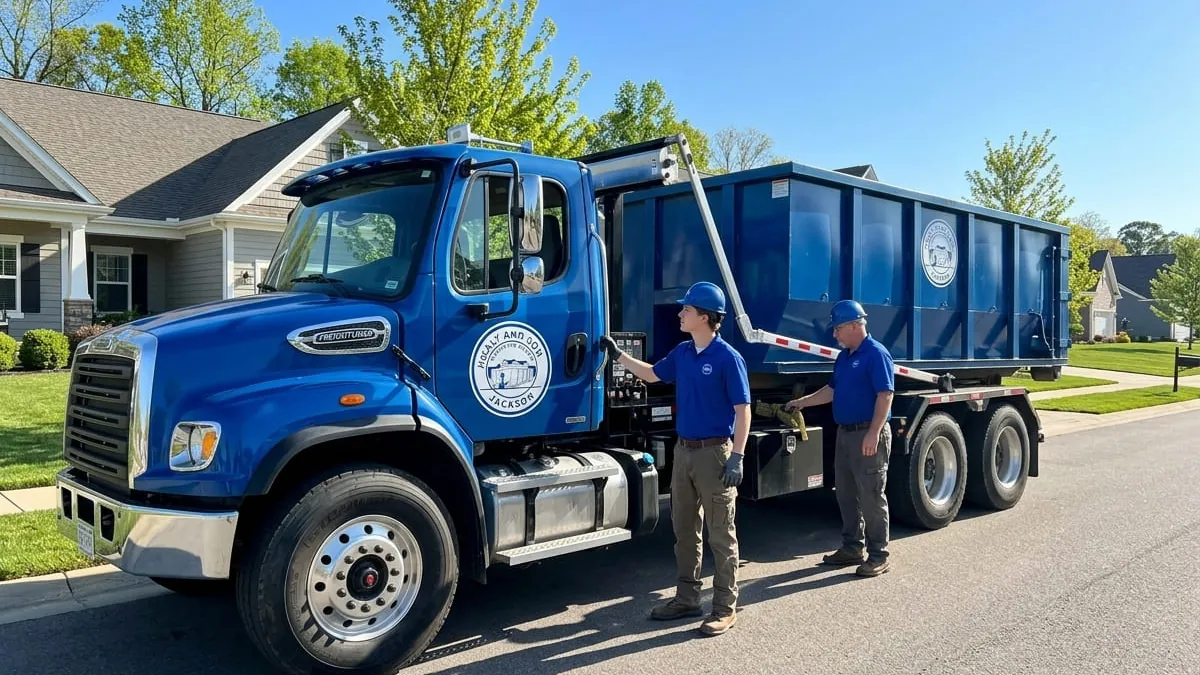
A roofing dumpster gets sized wrong more than any other job we book, and it usually isn't because anyone did the math wrong — it's because roofing is a weight job dressed up as a volume job. A container can look a third full and still be sitting at its tonnage limit, and the crew that sized off "how big does the roof look" instead of "how many squares and layers are coming off" is the one calling us mid-afternoon for a swap. Here's how we size these out of the yard on Greenway Drive Ext, and what changes when the roof came off a spring storm instead of a routine re-roof.
Roofers price and measure in squares — one square equals 100 square feet of roof surface, not floor space. You can get a workable estimate from the ground: take the home's footprint (length times width), add every wing, dormer, garage, and porch roof separately, and total the flat, as-if-laid-on-the-ground area.
Pitch adds surface area you can't see standing in the driveway. A low-slope roof (3/12–4/12) adds roughly 5–10% over the flat footprint; a standard 6/12–8/12, common across most Jackson-area gables, adds 12–20%; steeper roofs on some of the older homes in Belhaven, Fondren, and Eastover can add 25% or more once you count valleys and dormers. An 1,800-square-foot footprint at a 6/12 pitch typically works out to around 20–21 squares once waste and overlap are figured in. When you're not sure, round up — running short on delivery day costs more than booking one size larger.
This drives sizing more than anything else on the job:
A second layer doesn't just double the weight — it can more than double the moisture load, because old shingles have been soaking up Mississippi humidity and rain for years. A tear-off on a house that was re-roofed over an existing layer instead of stripped first routinely weighs more per square than fresh bundles going back up. If a roof took on hail or wind-driven rain before tear-off, the shingles coming off can be noticeably heavier still — saturated felt and cracked shingles hold water that a dry tear-off never would. Plan on the heavier end of these ranges for any storm-damaged roof.
| Roof size | 1 layer (tear-off) | 2 layers |
|---|---|---|
| Up to 15 squares (garage, small ranch, addition) | 15-yard | 20-yard |
| 16–25 squares (average single-story home) | 20-yard | 20-yard, likely weight-limited before it's full |
| 26–35 squares (larger two-story home) | 20 to 30-yard | 30-yard |
| 36+ squares (large home or multi-unit) | 30-yard | 30-yard, plan on a mid-job swap |
Treat this as a starting point — steep pitch, architectural shingles, and hail-soaked or double-layer debris push a job a size category higher. Most Jackson-area tear-offs land on a 15-yard for a smaller roof or a 20-yard for a typical 20–30 square roof — give us the square footage and layer count when you call and we'll size off real weight, not the box on the truck.
Every roll-off carries a tonnage allowance built into the flat-rate price, and shingles hit that cap before the box looks full. A single layer of architectural shingles off a 25-square roof already weighs a bit over two tons before nails and underlayment are added. A second layer, or a roof that soaked up rain ahead of tear-off, can push a container to its legal weight limit while it's still visibly two-thirds empty. That's not a defect in the container — it's what wet asphalt weighs. Size for weight up front and confirm the tonnage allowance with us before the first bundle goes over the rail; it's a lot cheaper than an overage fee at pickup.
Call (769) 246-8432 before tear-off day and tell us the square footage, layer count, and whether the roof took storm damage — we'd rather talk you into the next size up on the phone than swap a container mid-afternoon.
Mississippi's spring severe-thunderstorm and tornado season, typically running from late winter into early summer, is the biggest single driver of roof damage and roofing dumpster bookings we see all year. Hail bruises and cracks shingles, straight-line wind lifts and tears tabs loose, and a bad storm cell can send an entire neighborhood's roofing crews out at once. Mississippi has a serious tornado history — one of the deadliest tornadoes in state history, an F5, struck the Jackson area on March 3, 1966 — and while a storm on that scale is rare, spring hail and wind events that damage a roof enough to force a full tear-off are not.
That seasonal surge means two things worth planning around. First, insurance-driven re-roofs tend to cluster in spring and early summer, so roofing crews and dumpster availability both get busier — book earlier rather than waiting until the week you want the container delivered. Second, storm-damaged shingles that sat exposed to more rain before the tear-off started are heavier than a routine, planned re-roof, for the moisture reasons above. If your job followed a storm, mention that when you call so we size the container for wet weight, not dry-season weight. Our storm cleanup guide covers broader debris planning if the same storm brought down trees or damaged siding along with the roof.
Plenty of tear-offs also happen through Jackson's hot, humid summer, whether it's a planned replacement or the tail end of the spring storm backlog working through roofing crews' schedules. Heat changes the job more than most homeowners expect. Asphalt shingles soften in direct summer sun, which makes them easier to strip but also easier to scuff or crease if they're stacked wrong, and crews generally push for an early start and try to have the bulk of the tear-off wrapped before the worst of the afternoon heat and typical late-day thunderstorm buildup. A container that's ready and positioned before the crew shows up at daybreak keeps a hot job moving instead of stalling while everyone waits on delivery.
Afternoon storms are common in a Jackson summer, so an open roof deck sitting overnight is a real risk — most crews plan a tear-off to close in a single day or tarp exposed decking before quitting. That timing pressure is one more reason to have the dumpster on site and sized correctly before the first shingle comes off, rather than guessing and hoping it's enough.
Shingles come off fast once a crew gets going, and the container needs to sit close enough to the eave that debris goes straight from roof to box instead of roof to wheelbarrow to box. We place every container on boards, standard on every delivery, not an upsell — that matters more here than in a lot of places because the heavy Yazoo clay soil common across the Jackson metro shifts with wet-dry cycles and stresses driveways and slabs even without a loaded dumpster sitting on them for a week. Tell us your preferred placement and driveway layout when you call, and if space is tight, our narrow driveway placement guide covers how we handle it.
There's no confirmed dedicated permit fee or process for placing a roll-off dumpster on your own driveway or property in the City of Jackson — for most residential tear-offs, placement on your own property doesn't require anything from us. If the job site is tight and the container has to sit in the street or public right-of-way instead, contact the City of Jackson Public Works Department before delivery and give them lead time to weigh in. Roofing permit requirements themselves are a separate question from your contractor and the city's building department; check with them directly for your specific job.
The tear-off itself is only half the debris. Roofing nails scatter across the yard, driveway, and gutters no matter how careful the crew is, and a magnetic sweep of the whole work area — not just under the eave — is standard practice before a job is called finished. Old felt or underlayment, flashing, drip edge, pipe boots, and any rotten decking that gets replaced all ride along in the same container as the shingles. If you're not sure what else can go in with the roofing debris, our what-can-go-in-a-dumpster guide spells it out, and the Mississippi Department of Environmental Quality's solid waste guidance covers what disposal facilities in the state generally accept.
Have ready when you call:
We haul roofing tear-offs across Jackson, Byram, Clinton, Ridgeland, Madison, Flowood, Pearl, Brandon, and the rest of the Hinds, Rankin, and Madison county area we run, sized by weight because that's how the disposal facility bills us. Our roofing dumpster rental page covers container specs, and our sizing guide and cost guide help if you're pricing more than one job type at once. Call (769) 246-8432, or see our contact page for the yard address and hours, and describe the roof — we'll tell you the size, the price, and when we can have it in your driveway.
FAQs
A 20-yard container typically handles a single-layer tear-off of roughly 16-25 squares of asphalt shingles before it hits its tonnage limit, though architectural shingles, a second layer, or storm-soaked debris will cap it out sooner even if the box still looks half-empty. Tell us the square count and layer count and we'll confirm the size before delivery.
Shingles are dense, and wet shingles are worse. A single layer of architectural shingles off a mid-size roof can weigh over two tons before nails and underlayment are added, and shingles that soaked up rain from a storm before tear-off hold extra weight from that moisture. A container can legally max out on tonnage while it's still two-thirds empty by volume - that's normal for roofing loads, not a sign of a bad container.
Yes. Mississippi's spring severe-thunderstorm and tornado season is the biggest driver of roof damage we see, and insurance-driven re-roof jobs cluster heavily in spring and early summer as a result. Roofing crews and dumpster availability both get busier during that stretch, so it's worth booking earlier rather than waiting until the week you want the container delivered.
There's no confirmed dedicated permit fee or process for placing a container on your own driveway or property for most residential tear-offs. If the dumpster needs to sit in the street or public right-of-way instead, contact the City of Jackson Public Works Department before delivery and allow lead time for them to weigh in.
It changes the job more than it stops it. Asphalt shingles soften in direct summer sun, which makes tear-off easier but means crews often push for an early start and try to close the deck before the worst afternoon heat and typical late-day thunderstorms. Having the dumpster on site and correctly sized before the crew starts keeps a hot-weather tear-off from stalling.
Ready when you are
Call and you will speak to someone local who knows the streets, the permit rules and which box actually fits your driveway. Flat rate quoted up front.
Keep reading
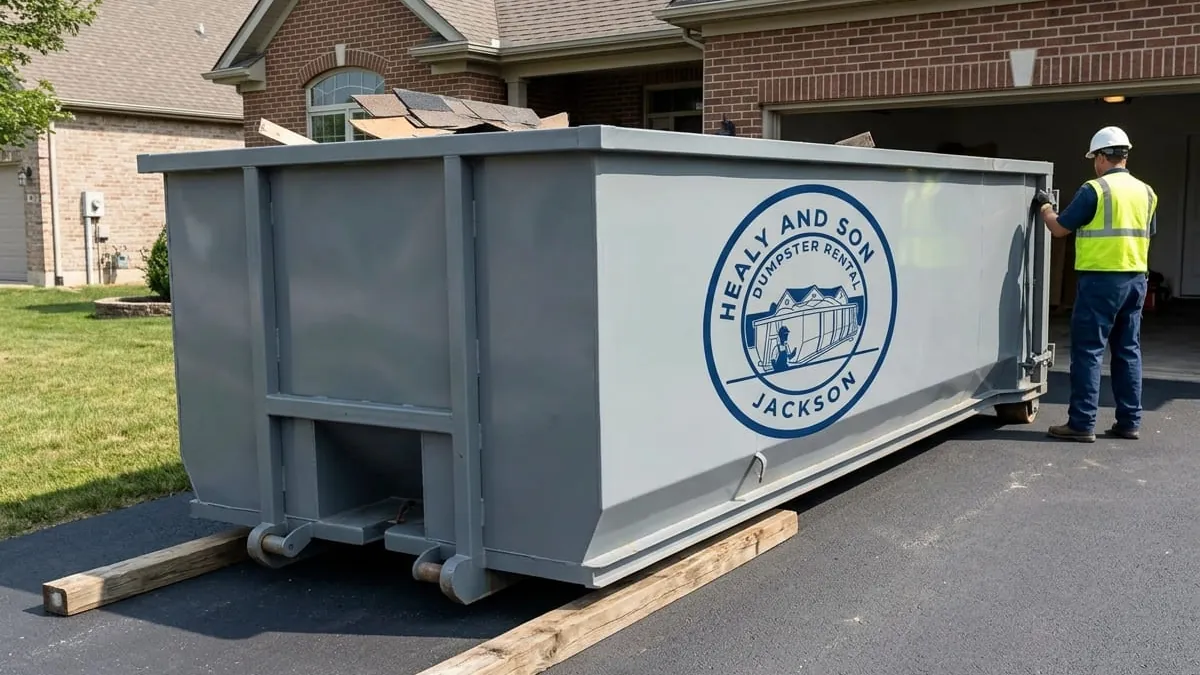
After a Jackson-area storm rolls through, the yard is full of limbs, the fence is down, and you need a container fast. Here's how to size and schedule storm-debris dumpster rental the right way.
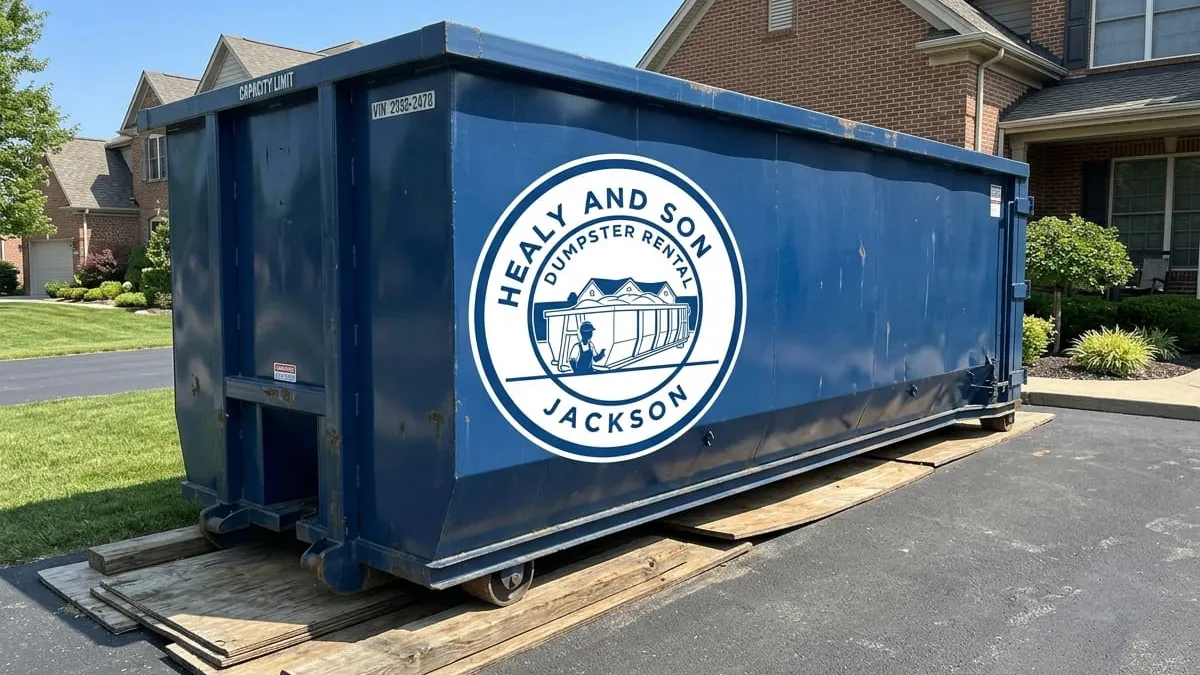
A Jackson operator's guide to fitting a roll-off dumpster on narrow older-neighborhood driveways, tight side-yard access, and gated-community lots, plus what happens when the driveway just won't work.

Who actually regulates trash in Jackson, what the City's recycling and household hazardous waste programs cover, and what Mississippi law says about tires, hazardous waste and electronics before you load a dumpster.