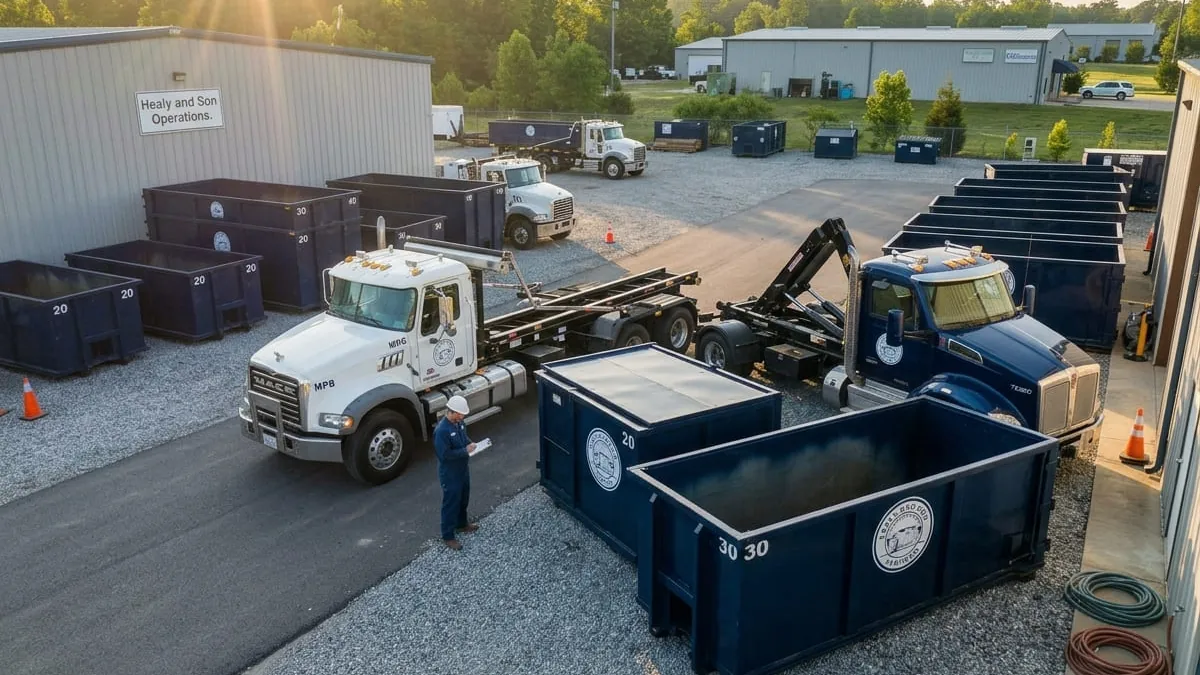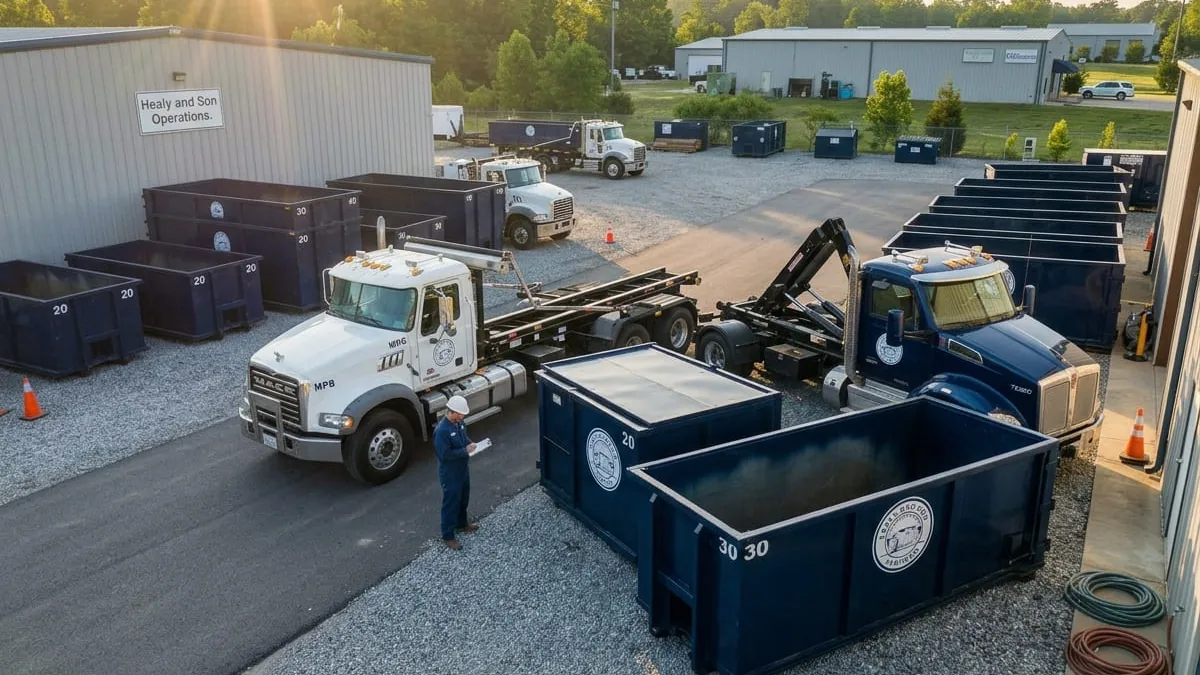
Most calls to our Greenway Drive Ext yard start close to the same way: "I'm probably going to need a 20." Sometimes that's exactly right. Just as often, the caller is guessing off a number a neighbor mentioned or whatever came up first in a search, and they end up either paying for space they never fill or getting hit with an overage charge because the box that looked plenty big by volume was full by weight before the job was half done. After years of dropping containers on driveways from Belhaven to Byram, here's how we actually size a rental — and why the honest answer is often smaller than people expect.
Volume Isn't the Number That Decides It
A dumpster's yardage tells you how much space is inside the box. It doesn't tell you how much weight you can leave our yard with. Every roll-off we deliver comes with a tonnage allowance built into the flat rate, and once a load crosses it, the overage gets billed by the ton — not because we're looking for extra fees, but because the truck hauling your container has a real weight limit on Mississippi roads. A 20-yard box holds a lot of cubic feet. Fill it with concrete, brick, or wet clay-heavy dirt and you can hit the weight ceiling with the container still looking half-empty.
Jackson's Clay Soil Changes the Math
This matters more here than in a lot of markets, because of what's under our yards. Much of the Jackson metro sits on heavy Yazoo clay that shifts through wet-dry cycles and stresses foundations, driveways, and slabs over time. That same clay ends up in a dumpster more often than homeowners expect — foundation repair spoil, drainage corrections, slab tear-outs, and backyard grading all produce dense, often waterlogged soil that weighs far more per cubic foot than general household debris. If your project involves digging into Jackson clay or breaking out concrete, tell us the volume of material coming out, not just the size of the hole. That's the number that decides whether a 10-yard handles it or whether you're better off planning two smaller pulls. Our concrete and heavy debris service is built around exactly this kind of dense-material pricing, and the Mississippi Department of Environmental Quality's general solid waste guidance is a useful reference if you're unsure how a given material needs to be handled.
One more thing worth flagging if you're gutting a home built before 1978, especially in the older neighborhoods near downtown, Belhaven, or Fondren: older paint, and, if plaster or flooring gets disturbed, potential asbestos are a real consideration. That's abatement work for a licensed contractor, not something we handle — but it's worth scoping before you order a dumpster, since abated material sometimes needs to be bagged and handled separately from the rest of your debris.
Sizing by Project — What Actually Fits
A few real examples from jobs we've run around the metro:
- Bathroom gut in an older Fondren bungalow: tile, plaster, cast-iron tub. A 10-yard was right — the tub and tile alone chewed through most of the ton allowance before the box was a third full.
- Kitchen remodel in Clinton: cabinets, laminate counters, vinyl flooring. Lighter materials, more volume. A 15-yard covered it with room to spare. See our residential dumpster rental page for how we size these day to day.
- Whole-house cleanout after an estate sale in Eastover: furniture, mattresses, decades of accumulated household goods — bulky but not dense. A 20-yard earns its keep here; our estate cleanout checklist walks through how to stage it.
- New-build framing scraps in Madison or Ridgeland: lumber offcuts, packaging, house wrap. Bulky and light, so a 30-yard makes sense — you'll run out of room before you run out of tonnage. Our construction dumpster rental service is built for this.
- Roof tear-off, 25-square ranch near Flowood: shingles are deceptively heavy, especially with a second layer underneath or after a wet spring. Our roofing dumpster guide covers it — most jobs this size land on a 20-yard with a tonnage bump, not a 30.
- Storm debris after a spring thunderstorm outbreak: downed limbs, damaged fencing, waterlogged insulation. Bulky and inconsistent in weight, so sizing depends heavily on volume of yard debris versus soaked building material — see our storm cleanup guide for how we handle these calls.
Why the Honest Answer Is Often One Size Down
Renters almost always round up "to be safe." We understand the instinct, but on flat-rate, tonnage-included pricing it usually costs you twice: you pay for capacity you never use, and on a lot of South Jackson and Byram lots, a bigger box is genuinely harder to place. If your project is dense material — clay, concrete, tile, shingles, wet debris — the tonnage limit hits before the box fills, so a smaller container with the right weight allowance does the job for less. We ask what's actually coming out of the property before we quote a size, and more often than not we talk people down a size, not up.
Narrow Driveways Change the Math Too
Volume and weight aside, some Jackson-area properties throw a third variable into sizing: access. A narrow driveway in an older part of town, a tight lot in Byram, or a shared drive can make a 30 or 40-yard container difficult to place safely, regardless of how much debris you're generating. In those cases we size for what our truck can deliver and retrieve without damaging the driveway or blocking the street — sometimes that means two pulls of a 15-yard instead of one 30-yard. Every delivery includes driveway protection boards as standard, but placement still matters. We cover the specifics in our narrow driveway placement guide. If your driveway is tight, mention it when you call — it changes the recommendation before we even talk about the project.
Loading It Right — Heavy on the Bottom, Level at the Top
- Heavy and flat first. Concrete, tile, clay, and shingles go in first, spread flat across the floor — not dumped in a pile at one end, which throws off axle weight on the truck.
- Break down bulky items. Flatten boxes, disassemble furniture, snap drywall sheets in half. Air is the enemy of every dumpster rental.
- Fill voids, don't stack loosely. Cram smaller debris into the gaps between larger pieces instead of tossing everything on top.
- Load level with the top rail, not above it. An overfilled box — anything mounded above the rail — can't legally be hauled on Mississippi roads. If our driver arrives to a peaked load, we have to ask you to pull material back below the rail before we can take it, which costs you time.
What Happens If You Guess Wrong
Undersize it and you're paying for a second pull — a same-day swap if you call before noon, but still a second trip and a delay on your timeline. Oversize it and you've paid for capacity that sat empty, or worse, tried to shoehorn a 40-yard onto a driveway that can't actually take it. Either mistake is avoidable with a five-minute conversation up front. Call (769) 246-8432 and walk us through the project — square footage, material type, and where the container needs to sit — and we'll size it right the first time.
Spring Storm Season Adds Its Own Wrinkle
If your project follows spring severe weather — Mississippi's primary storm season runs roughly February through May, with thunderstorms and occasional tornadoes the main driver of cleanup calls — factor in that storm debris is a mixed bag by weight. Downed limbs and brush are bulky but light; waterlogged insulation, carpet, and drywall are heavy for their size. We size storm cleanup jobs after asking what mix you're dealing with rather than off a flat rule of thumb. See our storm cleanup dumpster rental guide for more on how that works.
Quick Reference: Match Your Project
Not sure which category your job falls into? Browse our roll-off dumpster rental page for the full lineup, or if it's a smaller haul-away job rather than a container sitting on-site, look at junk removal instead. For active job sites, our construction dumpster rental page breaks down placement and scheduling, and our construction debris disposal guide covers what materials need to be separated before pickup. If cost is the deciding factor between two sizes, our dumpster rental cost guide breaks down what's included in the flat rate.
Serving Jackson and the Surrounding Communities
We deliver flat-rate roll-offs throughout the Jackson metro and Hinds, Rankin, Madison, and Copiah counties — from Byram and Clinton to Ridgeland, Madison, Flowood, and Brandon. Same-day delivery is available on orders placed before noon. Call (769) 246-8432 or use our contact page and we'll size the right box for your address and your project, not just a number off a chart.