
What Size Dumpster Do I Need? A Jackson, MS Homeowner's Guide
Dumpster sizing in Jackson comes down to weight as much as volume — especially once Yazoo clay, concrete, or storm debris are involved. Here's how to pick the right size the first time.
Jackson dumpster guide
Who actually regulates trash in Jackson, what the City's recycling and household hazardous waste programs cover, and what Mississippi law says about tires, hazardous waste and electronics before you load a dumpster.

Most people renting a dumpster never think about who is actually in charge of where that load ends up. In Jackson, two different layers of government handle it, and knowing the difference matters if you want a job to go smoothly. The Mississippi Department of Environmental Quality (MDEQ) sets the state-level rules for how solid waste has to be managed and disposed of. The City of Jackson runs the day-to-day residential trash and recycling program that most homeowners actually deal with. Neither one is who delivers your roll-off container — that is us — but both shape what can legally go in it.
MDEQ is the state agency responsible for permitting and overseeing solid waste management across Mississippi, including landfills, transfer stations and disposal practices. Its general solid waste guidance lays out how waste is supposed to be handled from generation to final disposal, and it is the agency that enforces state statutes on what can and cannot be mixed into ordinary trash. MDEQ does not send a truck to your curb, though. That part is local: the City of Jackson's Trash and Recycling program handles residential collection and recycling within city limits. Think of it as state rules, city service — MDEQ tells everyone in Mississippi what the guardrails are, and the City decides how Jackson residents get their bins emptied within those guardrails.
If you live outside Jackson's city limits — in Byram, Terry, Clinton, Richland or one of the other communities we serve — your trash service may run through your county or a private hauler instead of the City program, but the same MDEQ state rules still apply to what can legally be disposed of.
Regular curbside pickup and a rented dumpster are both meant for ordinary household and construction debris — not chemicals, batteries or electronics. For those items, the City of Jackson operates a Household Hazardous Waste program for residents. Based on the City's published information, it accepts materials like:
This program is for residents disposing of household quantities, not a substitute for how a construction or demolition job handles waste at scale. We would recommend confirming current drop-off details directly with the City before you make a trip, since hours and accepted-item specifics can change. The practical point for a dumpster rental is simpler: if you find old paint cans, a stack of car batteries or a box of dead electronics while you are cleaning out a garage or estate, set them aside for the City's program rather than tossing them in the container.
A few specific state rules matter more than general guidance when you are standing next to a loaded dumpster, and it is worth knowing them by name rather than by rumor.
Under Mississippi Code § 17-17-15, hazardous waste cannot be co-disposed with ordinary solid waste. In plain terms, that means chemicals, solvents, certain paints, pesticides and similar hazardous materials are not allowed to go into the same load as your household junk, roofing debris or renovation trash — whether that load is headed for curbside pickup or a rented roll-off. This is not a company policy we made up to avoid extra work; it is state law, and it is one of the main reasons a hauler will flag a load that has the wrong material mixed in.
Mississippi runs a dedicated waste-tire program under Miss. Code §§ 17-17-401 through 17-17-445. Tires are not treated as ordinary trash under state law — they have to be diverted through the tire program rather than landfilled with general debris. If a cleanout or garage purge turns up old tires, plan on handling those separately rather than tossing them into your dumpster with everything else.
One thing worth being accurate about: Mississippi does not have a statewide law banning electronics from landfills the way some states do. There is no legal prohibition on landfilling e-waste in Mississippi. That said, MDEQ and the City's Household Hazardous Waste program both make electronics recycling available and encourage residents to use it, since electronics can contain materials better handled through a dedicated recycling stream than mixed disposal. So the honest framing is: recycling your old TV or computer through the City's program is the responsible choice and the one we'd recommend, but it is encouraged rather than mandated by state law the way hazardous waste co-disposal or tire disposal are.
Put together, here is how the rules translate into practice for a typical rental:
| Material | Rule | Goes in your dumpster? |
|---|---|---|
| Household chemicals, pesticides, paint | Miss. Code § 17-17-15 bars mixing with ordinary trash | No — City HHW program |
| Old car or household batteries | Often accepted via City HHW program | No, if hazardous-type batteries |
| Vehicle or equipment tires | Diverted under Miss. Code §§ 17-17-401–445 | No — separate tire disposal |
| Old TVs, computers, electronics | No statewide landfill ban, but recycling encouraged | Best kept out; ask us if unsure |
| Fluorescent bulbs | Accepted via City HHW program | No |
| General construction debris, drywall, lumber, roofing | Ordinary solid waste | Yes |
| Furniture, general household junk | Ordinary solid waste | Yes |
| Yard waste (branches, clippings) | Generally handled outside general trash disposal | Better as a separate load — ask about our yard waste service |
For a fuller item-by-item breakdown beyond hazardous materials and tires, our guide to what can go in a dumpster in Mississippi covers weight limits and prohibited items in more detail.
None of this is meant to make a simple cleanout feel complicated. In practice, it comes down to a short mental checklist before you start loading: keep chemicals and hazardous materials out, keep tires out, and set electronics aside for recycling even though it is not legally required. Everything else — drywall, lumber, shingles, old furniture, general debris from a estate cleanout or a construction project — is exactly what a roll-off dumpster is built for.
Where it does matter is avoiding a rejected load. A hauler who finds hazardous waste, tires or a pile of old car batteries mixed into a container has to stop and deal with it, which slows your project down and can add cost. If you are not sure whether something belongs in your container, it is faster to call us before you load it than to find out after the truck arrives. We deliver 10-yard through 40-yard containers across Jackson, Byram, Clinton, Ridgeland, Madison, Brandon and the surrounding communities, and we would rather answer a quick question up front than deal with a hold-up on delivery day. Call (769) 246-8432 and ask — James and the crew can tell you exactly what needs to be set aside before your container ever shows up. You can also check our dumpster rental cost guide or permit guide while you're planning the job.
FAQs
No. MDEQ, the Mississippi Department of Environmental Quality, sets state-level rules for how solid waste has to be managed and disposed of across Mississippi. Actual residential trash and recycling collection in Jackson is run by the City of Jackson's Trash and Recycling program, not MDEQ directly.
No. Mississippi Code Section 17-17-15 bars mixing hazardous waste with ordinary trash. Items like paint, pesticides, automotive fluids and certain batteries need to go through the City of Jackson's Household Hazardous Waste program instead of into a general dumpster load.
No. Mississippi runs a dedicated waste-tire program under Miss. Code Sections 17-17-401 through 17-17-445, and tires have to be diverted through that program rather than landfilled with general trash or construction debris.
Not technically. Mississippi does not have a statewide landfill ban on electronics the way some states do, so there is no legal prohibition on landfilling e-waste here. That said, the City of Jackson's Household Hazardous Waste program accepts electronics for recycling, and using it is the responsible choice even though it is encouraged rather than legally mandated.
Call us before you load it. We can tell you quickly whether an item needs to be set aside for the City's Household Hazardous Waste program, the state tire program, or electronics recycling, which is faster than dealing with a rejected or held-up load after the truck arrives. Reach us at (769) 246-8432.
Ready when you are
Call and you will speak to someone local who knows the streets, the permit rules and which box actually fits your driveway. Flat rate quoted up front.
Keep reading
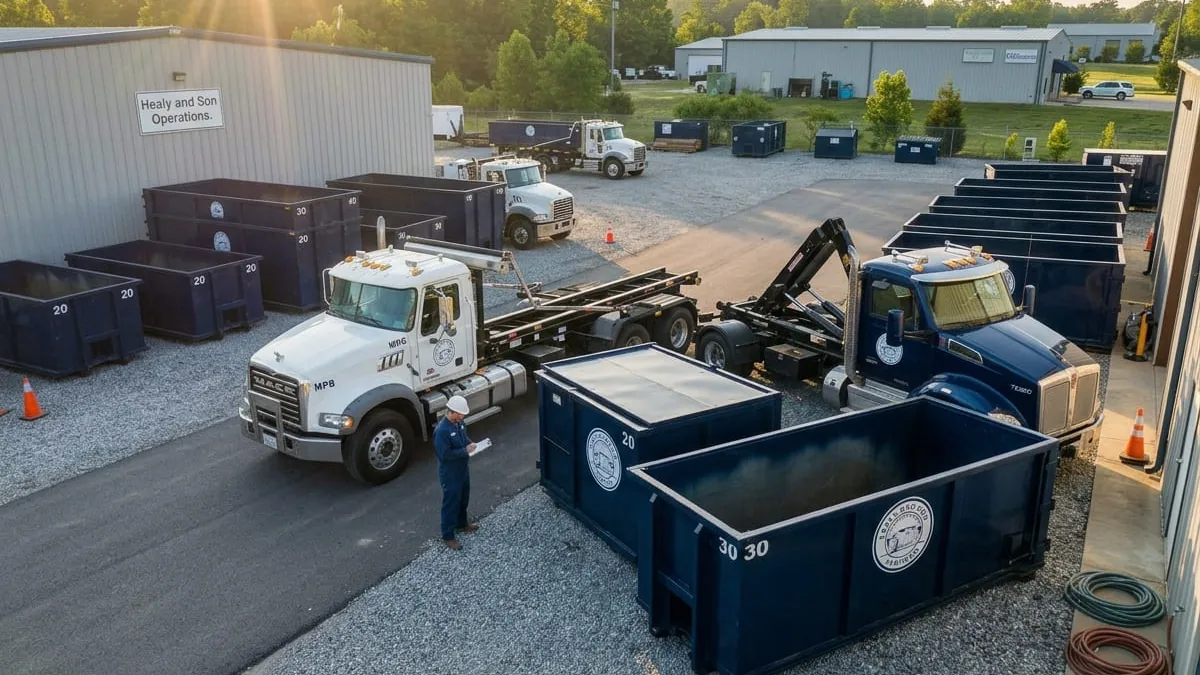
Dumpster sizing in Jackson comes down to weight as much as volume — especially once Yazoo clay, concrete, or storm debris are involved. Here's how to pick the right size the first time.

Size, rental period, tonnage, debris type, and access all move dumpster rental cost in Jackson. Here's what sets the price and why a real quote beats a generic number.

Most of a cleanout or remodel can go straight in the roll-off. A short list of items can't — here's what Mississippi rules say about paint, tires, appliances, batteries, and asbestos, and where those items actually need to go.