Search "dumpster rental cost Jackson MS" and you'll find plenty of websites happy to throw out a number. The trouble is that number usually isn't built from your job — it's a generic figure meant to get you to click or call, and it rarely matches what shows up on your invoice. We'd rather explain what actually sets the price and then give you a real number over the phone once we know what you're working with.
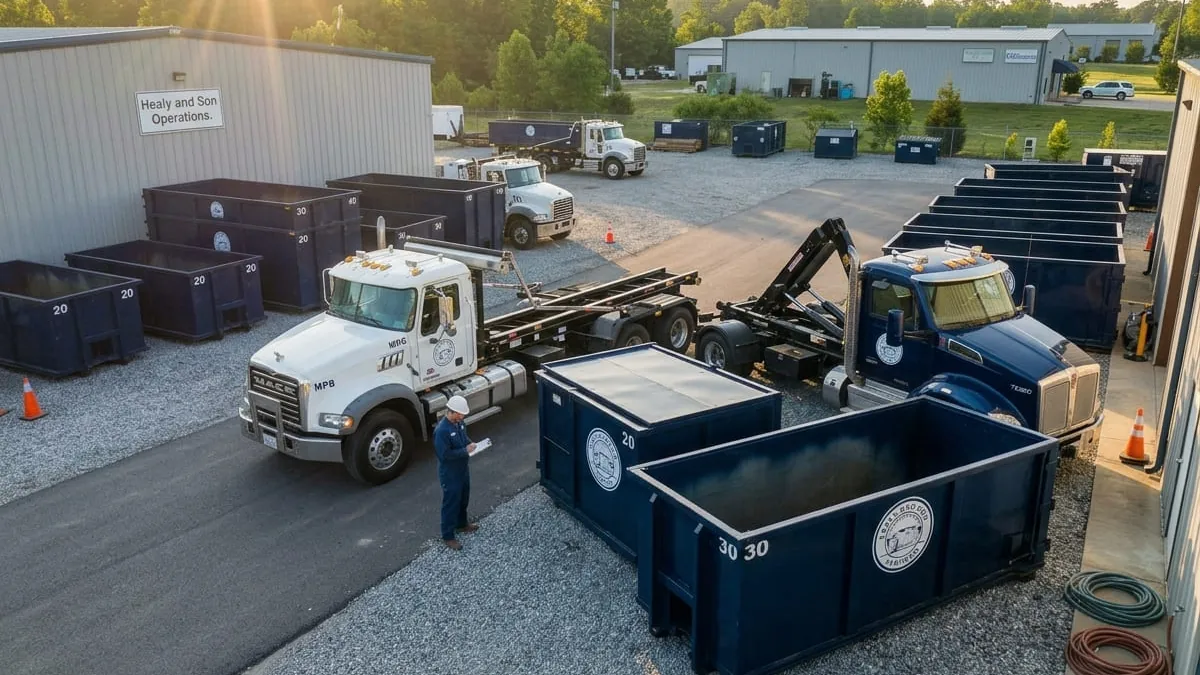
We've run Healy and Son Dumpster Rental out of South Jackson since 2011, delivering roll-off containers across Hinds, Rankin, Madison, and Copiah counties. Every quote we give is flat-rate — delivery, the rental period, a tonnage allowance, and pickup, all in one number, with no fuel surcharge or hidden line item tacked on later. What changes from job to job isn't our pricing model, it's the five factors below. Call (769) 246-8432 and we'll walk through yours in a few minutes.
What "Flat-Rate" Actually Means
A flat-rate quote bundles everything into one price before the truck ever leaves our yard: the container itself, delivery to your address, an agreed rental period, an included tonnage allowance, and the pickup and haul-away at the end. You know that number before you commit. There's no separate delivery charge, no fuel add-on, and no mystery fee that shows up after the container's already sitting in your driveway. If something outside the original scope changes — you go well over the tonnage allowance, or you need the box longer than planned — we'll tell you before it happens, not after.
The Factors That Actually Set the Price
1. Size
A 10-yard dumpster costs less than a 30-yard dumpster or a 40-yard dumpster, largely because a bigger box comes with a bigger included tonnage allowance and takes more truck and yard capacity to move. Renting too big "just in case" is one of the most common ways people overpay. Our size guide breaks down which size fits which project, and the full sizes page lists all five options with dimensions and typical uses.
2. Rental Period
Every flat-rate quote includes a set rental window. That window needs to match your actual timeline, not the optimistic version of it. A remodel that stalls because a contractor got delayed, or a cleanout that takes longer than expected once you start, is the usual reason a rental period runs short. Tell us up front if your timeline is soft and we'll build the quote around it instead of guessing.
3. Weight and Tonnage
This is the factor most people don't think about until it's already an issue. Every dumpster size comes with an included tonnage allowance built into the flat rate. Loaded trucks are weighed at the disposal facility, and that weight is what determines whether a load fell within the allowance or went over it — not how full the box looks from the driveway. Dense material adds weight fast: concrete, dirt, brick, and roofing shingles can fill a fraction of a container's volume and still weigh more than a full load of household junk. That's why we ask what's actually going into the box before we quote it, not after.
4. Debris Type
What you're throwing away matters as much as how much of it there is. A roofing tear-off and a concrete or heavy debris job need a container built for weight, not just volume — loading dense material into a box sized for bulky, light junk burns through the tonnage allowance quickly. A straightforward residential cleanout or yard waste pickup runs lighter and more predictably. Mixed loads — a little bit of everything — also cost more to sort and dispose of than a single, separated material.
5. Location and Access
Where the container sits and how our truck reaches it affects the job. A flat, open driveway in Byram is a straightforward drop. A narrow driveway, a tight urban lot in Belhaven or Fondren, or a container that has to sit closer to the street changes what's possible and sometimes what size fits at all. We set boards under every container as standard, at no extra charge, to protect the surface underneath — that matters here more than in a lot of places, because Jackson-area soil runs heavy in Yazoo clay that shifts with wet-dry cycles and puts real stress on driveways and slabs over time. Our narrow driveway placement guide covers tight-access delivery in more detail.
What Doesn't Belong in the Box (and Why It Affects Cost)
Certain materials can't legally go into a general debris dumpster, and putting them in anyway can turn into a real cost problem — not just an inconvenience. Mississippi law bars mixing hazardous waste with ordinary trash (Miss. Code § 17-17-15), and the state runs a dedicated program requiring tires to be diverted rather than landfilled with general debris (Miss. Code §§ 17-17-401–445). Paint, batteries, oils, pesticides, and similar household hazardous items are handled through the City of Jackson's Household Hazardous Waste program for residents, not through a rental dumpster. Electronics aren't under a statewide landfill ban in Mississippi, but MDEQ and the City's HHW program encourage recycling them rather than tossing them in with general debris. Our what can go in a dumpster guide and the MDEQ solid waste guidance page cover the specifics. Ask us before you load anything you're unsure about — it's a quick question that avoids a bigger one later.
Permits and Placement
If the container sits entirely on your own driveway or property, you generally don't need a permit. If it has to sit in the street or public right-of-way, you'll need to contact the City of Jackson before delivery day and allow some lead time to get that squared away. This isn't something we can quote a fee for, since it runs through the city rather than through us — our permit guide walks through how to figure out which situation applies to your address, and jacksonms.gov is the place to start if you need to check with the city directly.
Cost Driver Summary
Why a Generic Online Price Doesn't Fit Your Job
A number pulled from a search result can't know your driveway, your debris, or your timeline. It's built to be low enough to get a click, which means it's rarely the number that matches a real invoice. We'd rather ask a few quick questions — what size, what's going in it, how long you'll need it, and what the delivery spot looks like — and give you an accurate flat rate based on your actual job. That call takes a few minutes and saves you from guessing.
Questions Worth Asking Before You Book
- What size fits my project, and what's the included tonnage allowance?
- What's the rental period, and what happens if I need more time?
- Is delivery and pickup included in the quoted price, or added separately?
- What debris is and isn't allowed in the container?
- Will my address need city contact for right-of-way placement?
- What happens if the truck can't get clean access on delivery or pickup day?
If a hauler can't answer those clearly before you book, that's worth noticing. We answer all of them on the first call, same-day when you call before noon. Reach us at (769) 246-8432 or through our contact page, and see our full services and sizes pages if you're still narrowing down what you need. For commercial and job-site work, our commercial dumpster rental and construction dumpster rental pages cover what those quotes typically involve.