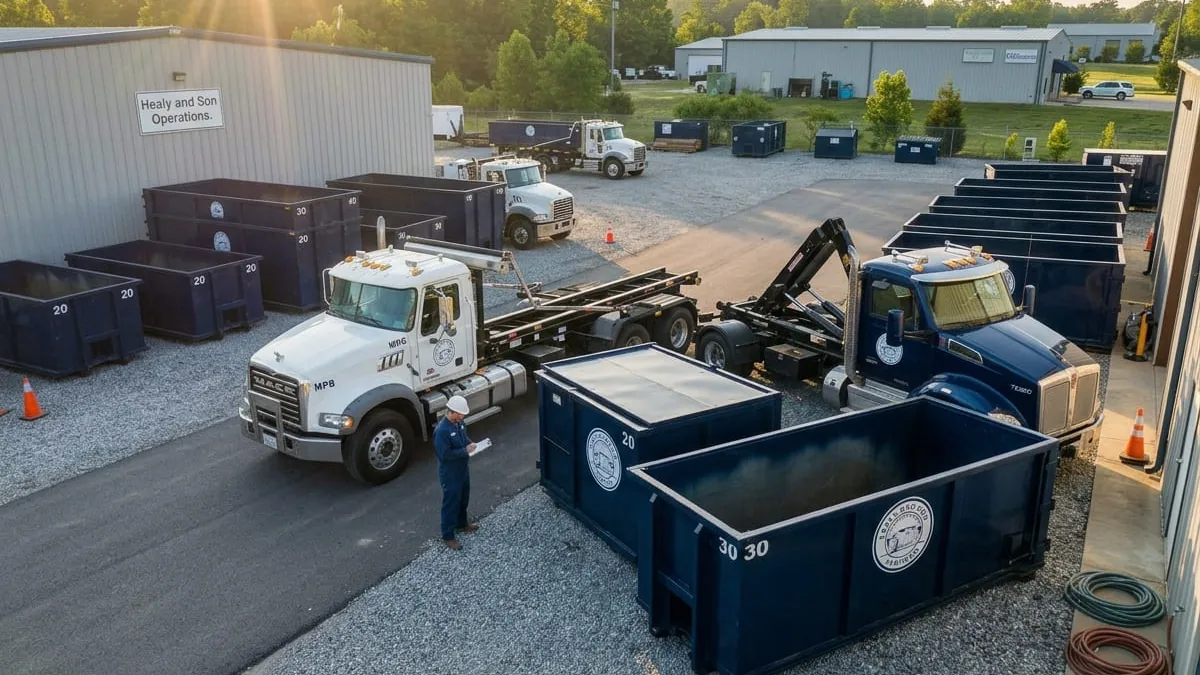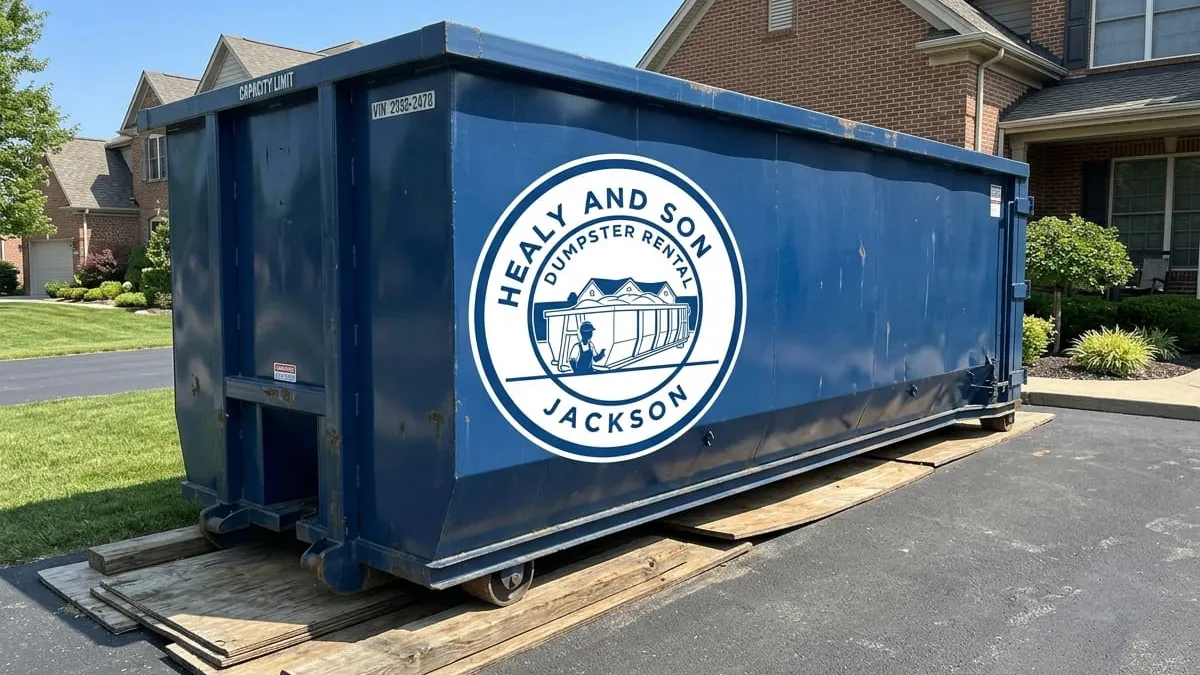
Jackson doesn't have hillside driveways, but we run into a different placement problem just as often: driveways that simply weren't built for a modern roll-off truck. A lot of our calls from Belhaven, Fondren, and the streets around downtown involve a driveway that was poured for a single sedan sometime in the mid-1900s, a side yard barely wider than a garden hose, or a decorative gate at a newer subdivision that a delivery truck can't swing through. We've been placing containers around Jackson since 2011, and getting the box onto a tight lot without damage almost always comes down to asking the right questions before the truck ever leaves our yard on Greenway Drive Ext.
Why Narrow Driveways Are So Common Here
Belhaven, Fondren, Eastover, Woodland Hills, and Broadmoor are some of the most architecturally distinctive neighborhoods in Jackson, and that character comes with older lot layouts. Homes were built close together on narrower footprints than you'll find in newer South Jackson or Byram subdivisions, driveways are often a single narrow strip of concrete running alongside the house, and there's rarely a second access point. Add mature trees, foundation plantings, and decades of settling, and what looks like a straightforward driveway on paper can be genuinely tight in person.
None of that makes these properties off-limits for a dumpster. It just means we plan the delivery differently than we would on a wide-open newer lot, and it's worth talking through before you book rather than after the truck shows up and can't turn in.
What a Roll-Off Truck Actually Needs
A roll-off truck needs a fairly specific amount of room to set a container down without hitting anything. As a general rule, our drivers look for:
- Roughly 60 feet of straight, unobstructed approach to back in and place the box cleanly
- About 10 to 12 feet of clear width along the delivery path, wider if there's a fence, mailbox, or parked car close to the edge
- Overhead clearance for the container to tip up off the truck rails without catching gutters, porch roofs, carport frames, or low tree limbs
On a lot with a straight, wide driveway that's rarely an issue. On a narrow older driveway hemmed in by the house on one side and a fence or neighbor's property line on the other, any one of those three things can be the sticking point — and often it's the overhead clearance that surprises people, since carports and low eaves are common on older Jackson homes.
Side Yards, Gates, and Newer Gated Communities
Narrow access isn't only an older-neighborhood problem. Some of the newer subdivisions we serve around Madison, Ridgeland, and Brandon have decorative entrance gates, brick columns, or HOA-installed fencing that narrows the usable driveway width right at the point a truck needs the most room to maneuver. A driveway that's plenty wide once you're on the property can still be too tight to enter if the gate posts or columns squeeze the approach.
Side-yard placement runs into the same issue from a different angle. A side yard that looks open enough for a container to sit in often isn't wide enough for the truck itself to get the box into position, even if the container would fit once it's there. We ask about gates, columns, and side-yard width specifically on the phone, because a measurement that's off by even a foot or two can be the difference between a clean delivery and a truck that has to back out and try the street instead.
Yazoo Clay and Why Surface Protection Matters More on These Driveways
Jackson sits on heavy Yazoo clay soil, and that soil expands and contracts with wet and dry cycles throughout the year. Over time that movement puts real stress on foundations, slabs, and driveways — it's a big part of why older concrete driveways around Belhaven and Fondren often already show some hairline cracking or slight settling before a dumpster ever gets involved. A driveway surface that's already under stress from clay movement has less margin for the point-load weight of a loaded roll-off container sitting on it for a week or two.
That's the main reason we put boards under the rails of every container we deliver, as a standard practice rather than an upsell. It spreads the container's weight out instead of concentrating it on a few square inches of rail, which matters most on the exact kind of aging, clay-stressed concrete you'll find on a lot of Jackson's older driveways.
How We Evaluate a Tight Driveway Before We Ever Show Up
We'd rather ask a few extra questions on the phone than send a truck out and have it turn around. When you call (769) 246-8432, here's what helps us plan the delivery correctly the first time:
What to have ready when you call
- Driveway width at its narrowest point, including any gate posts, columns, or fence lines
- Whether there's a straight shot in, or the truck would need to turn a corner to get positioned
- Overhead obstacles — carports, low tree limbs, power lines, porch roofs
- Whether the property is in a gated community with an entrance the truck needs to clear
- Roughly how old the driveway is and whether you've noticed any existing cracking
For anything that sounds genuinely tight, we'll often suggest a quick look before delivery day rather than guess from a phone description. It takes a few minutes and it means the driver who shows up already knows exactly how the box needs to go in.
When the Driveway Won't Work: Street Placement
Sometimes a driveway just isn't going to accept a roll-off container safely, whether that's a narrow older lot with no straight approach or a gated community entrance the truck can't clear. When that happens, the street is usually the fallback. Placing a container on your own driveway or property generally doesn't require a permit, but if the box needs to sit in the street or public right-of-way, you'll want to contact the City of Jackson Public Works Department before delivery day and give it some lead time to review the request — details are on the city's site at jacksonms.gov. We walk through this in more detail in our Jackson dumpster permit guide, and we can help coordinate the street-placement conversation if that's the route your project needs.
Choosing a Smaller Box for a Tight Lot
On a genuinely narrow driveway, the right container isn't always the biggest one your project could theoretically use. A 10-yard dumpster or 15-yard dumpster has a smaller footprint and is easier to place and pull safely from a tight approach than a 20-yard or 30-yard box, and for a lot of cleanout and small remodel projects it's plenty of capacity anyway. We'd rather schedule an extra pickup on a smaller container than force a box onto a driveway that can't comfortably hold it.
Book With Confidence, Even on a Tight Lot
We've been figuring out narrow Jackson driveways since 2011, with flat-rate pricing and driveway board protection included on every delivery, not charged as an add-on. If your property has a narrow approach, a side yard, or a gated entrance, call (769) 246-8432 and describe it before you book — it's the fastest way to make sure we send the right size truck and container for your driveway the first time. You can also reach us through our contact page, check our FAQ for more delivery details, or see what's included on our residential dumpster rental page.